


You just got a wallet case. You slide in your credit card, your ID, maybe a backup card. Then the thought creeps in: "Wait, is my phone going to destroy these?"
It's a fair question. Phones have magnets. Credit cards have magnetic stripes. Magnets and magnetic things don't usually get along. So are you slowly frying your Visa every time you check Instagram?
Short answer: no. Your credit cards are almost certainly fine. But there's some nuance worth knowing, especially if you carry hotel key cards or older cards with magnetic stripes. Let me break it down.
What's In This Guide
- Do Phone Magnets Actually Damage Credit Cards?
- Why Some Cards Are More Vulnerable Than Others
- What About the Chip and Tap-to-Pay?
- Is MagSafe Safe for Credit Cards?
- Do You Need RFID Protection?
- The One Scenario That Actually Risks Your Cards
- What Actually Damages Credit Cards
- How to Keep Your Cards Safe in a Wallet Case
- Are Wallet Phone Cases Safe for Cards?
- Protect Your Whole Setup
- FAQ
Do Phone Magnets Actually Damage Credit Cards?
Here's what's actually going on inside your phone: there are small magnets in the speakers, the vibration motor, and (if you have an iPhone 12 or newer) the MagSafe ring. These magnets produce a magnetic field measured in gauss.
The magnets in a typical phone produce far less than 200 gauss at the surface. For context, a refrigerator magnet produces about 50 gauss. An MRI machine? 15,000 to 30,000 gauss.
Your credit card's magnetic stripe needs approximately 4,000 gauss to be erased. 1 That's 20x stronger than what your phone puts out. The phone magnets aren't even in the same ballpark.
So no, your phone isn't silently demagnetizing your credit card. Not even close.
Why Some Cards Are More Vulnerable Than Others
Not all magnetic stripes are created equal. There are two types:
HiCo (High Coercivity) cards have a black magnetic stripe. These are your credit cards, debit cards, and driver's licenses. They require about 4,000 gauss to demagnetize. Your phone's magnets produce roughly 200 gauss. You're safe.
LoCo (Low Coercivity) cards have a brown or lighter stripe. These are hotel key cards, gift cards, parking garage tickets, and some transit cards. They can be erased at around 300 gauss, which is much closer to what a phone's magnets produce.
This is why your hotel key card sometimes stops working when you keep it next to your phone, but your Visa never does. Different card, different vulnerability.
The practical takeaway: Keep your credit cards in your wallet case without worry. But if you get a hotel key card, put it in a pocket away from your phone.
What About the Chip and Tap-to-Pay?
The EMV chip on your credit card (that little gold or silver square) stores data digitally on a semiconductor, similar to how a USB drive works. It is physically impossible for a magnet to erase or damage it. You could press a magnet directly against the chip and it would still work perfectly.
Tap-to-pay (NFC) uses a small antenna coil inside the card. Magnets don't damage it either. A strong magnet placed directly between the card and a reader could temporarily block the signal, but the moment you move the magnet away, tap-to-pay works fine again. No permanent damage.
The vast majority of card transactions now use the EMV chip, according to EMVCo. 2 The magnetic stripe is essentially a backup system at this point. Even if something did happen to your stripe, you'd almost never notice.
Is MagSafe Safe for Credit Cards?
Apple's MagSafe ring produces approximately 200 gauss at the surface of the phone. That drops significantly with a case between the phone and the card. Remember, your credit card needs 4,000 gauss to be affected.
Consumer Reports tested this directly and confirmed: MagSafe does not demagnetize credit cards. 3
Apple themselves say their MagSafe Wallet is safe for credit cards. They do, however, specifically warn against storing LoCo items (hotel keys, security badges) against the MagSafe surface. That 200 gauss gets close to the 300 gauss LoCo threshold with prolonged direct contact.
If you use MagSafe: credit cards are fine. Hotel keys, keep them separate.
Do You Need RFID Protection in a Wallet Case?
This is where things get interesting. RFID skimming is the fear that someone with a reader device could walk past you and wirelessly steal your credit card information right through your pocket.
It sounds terrifying. It's also almost entirely theoretical.
Security researchers have been looking for verified real-world cases of RFID credit card skimming for years. To date, neither the FBI nor the FTC has flagged it as a widespread consumer threat. Independent investigations by cybersecurity outlets have found no confirmed cases of criminals successfully stealing credit card data via RFID in real-world settings.
Here's why it doesn't work well in practice:
- Modern contactless cards use dynamic authentication codes that change with every transaction. Even if someone captured your card's signal, they couldn't replay it.
- The read range is only a few centimeters, not feet or meters. An attacker would need to press their reader against your pocket.
- Criminals would need a legitimate merchant account and card terminal to process any captured data.
- It's dramatically easier (and more profitable) for criminals to use traditional skimmers on ATMs, data breaches, or buy stolen card numbers online.
So do you need RFID protection? Honestly, no. But some wallet cases include it at no extra cost. The Wingmate, for example, has built-in RFID-blocking material. It doesn't add bulk, doesn't add cost, and gives you one less thing to think about. Peace of mind for free is hard to argue with.
The One Scenario That Actually Risks Your Cards
Here's the thing nobody talks about: wireless charging is the real risk, not the magnets themselves.
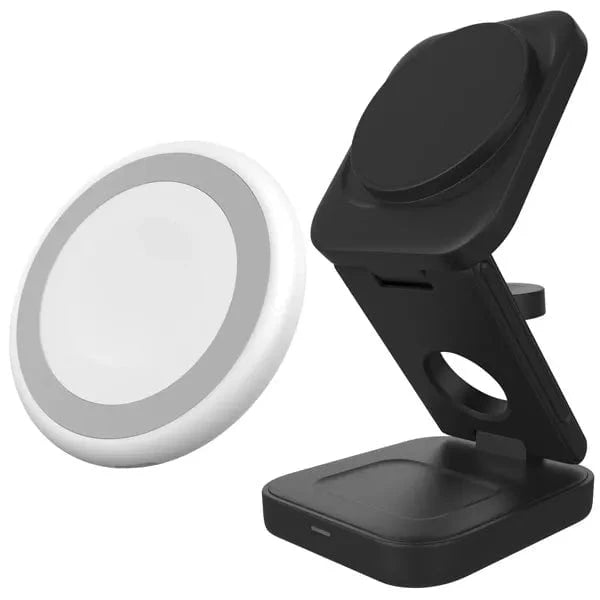
When a wireless charger is actively transferring power, it creates a much stronger electromagnetic field than the passive magnets in your phone. If you leave a credit card sandwiched between your phone and a wireless charger while it's charging, the active field could potentially affect even a HiCo card's magnetic stripe over time.
The fix is obvious: remove your cards (or your wallet case) before wireless charging. Or better yet, just plug in. Wired charging is faster, more reliable, and doesn't create any magnetic field concerns at all.
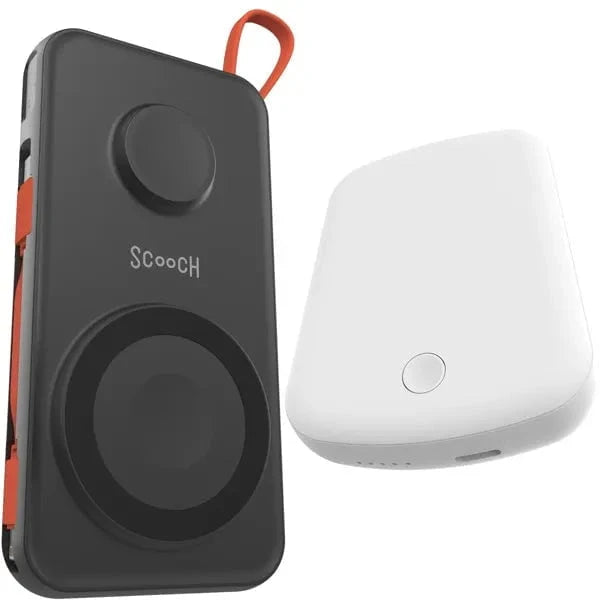
Most wallet cases, including ours, aren't compatible with wireless charging anyway (the cards block the Qi signal). So this scenario is unlikely to happen by accident. The Moneymate pops off in one second if you ever want to charge wirelessly without the case.
What Actually Damages Credit Cards (It's Not Your Phone)
If your credit card stops working, it's probably not your phone's fault. Here are the actual culprits:
Physical wear. Scratches on the magnetic stripe from sliding in and out of wallets, readers, and pockets. This is the number one cause of stripe failure, and it happens gradually over time.
Heat. Leaving your wallet in a hot car, sitting on a sun-baked dashboard, or running it through a hot dryer. High temperatures can disrupt the magnetic particle alignment on the stripe.
Bending. Sitting on your wallet. Cramming too many cards into a tight pocket. Repeated flexing weakens both the stripe and the chip contacts over time.
Card-on-card friction. Two magnetic stripe cards rubbing against each other in your wallet can slowly degrade both stripes.
Industrial magnets. Working near MRI machines, industrial equipment, or large speaker systems with powerful magnets. These are the 4,000+ gauss sources that can actually erase a HiCo stripe. Your phone is not one of these.
Your credit card company expects this wear and tear, which is why they send you a new card every 3-5 years. The expiration date isn't just a security measure. It's an acknowledgment that the physical card degrades over time.
How to Keep Your Cards Safe in a Wallet Case
Even though the risk to your credit cards is minimal, here are some practical tips for wallet case users:
Don't store hotel key cards in your wallet case. LoCo cards are the one exception to the "your cards are fine" rule. When you check into a hotel, keep the key card in a separate pocket or your bag.
Remove cards before wireless charging. If you're one of the rare wallet case users who also wireless charges (most wallet cases block Qi anyway), take the case off first. Active wireless charging fields are stronger than passive magnets.
Don't overstuff the card slot. Cramming more cards than the case is designed for creates friction, which wears down magnetic stripes faster than any phone magnet ever could. Most wallet cases are designed for 3-4 cards. Stick to that.
Keep your most-used card on the outside. If the case has multiple slots, put your daily driver card in the most accessible position. Less fumbling means less physical wear on the other cards.
Wipe down the card slot occasionally. Pocket lint and dust create friction. A quick wipe with a soft cloth keeps cards sliding smoothly.
Are Wallet Phone Cases Safe for Cards?
Yes. Here's the summary:
- Your credit card's EMV chip: Cannot be damaged by magnets. Period.
- Your credit card's NFC/tap-to-pay: Cannot be permanently damaged by magnets.
- Your credit card's magnetic stripe: Needs 4,000 gauss to erase. Your phone produces less than 200. Safe.
- Hotel key cards (LoCo): Can be affected by prolonged contact with phone magnets. Keep them separate.
Millions of people carry their credit cards in wallet cases every day without issues. It's one of those fears that sounds logical on the surface but doesn't hold up when you look at the actual physics.
Wallet Cases That Protect Your Cards and Your Phone
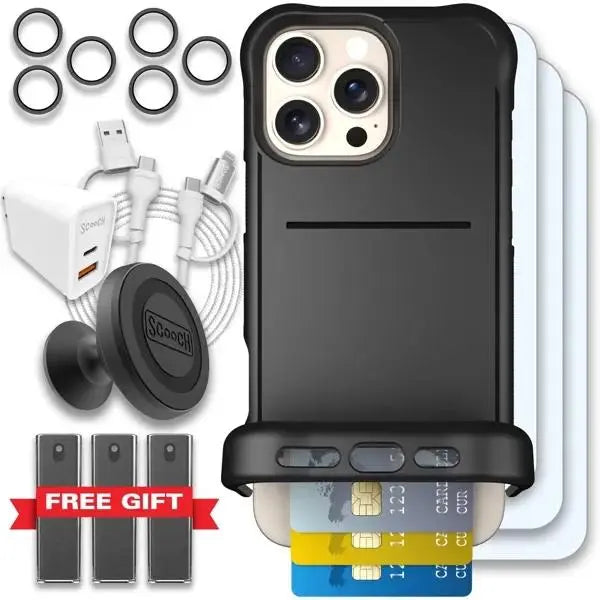
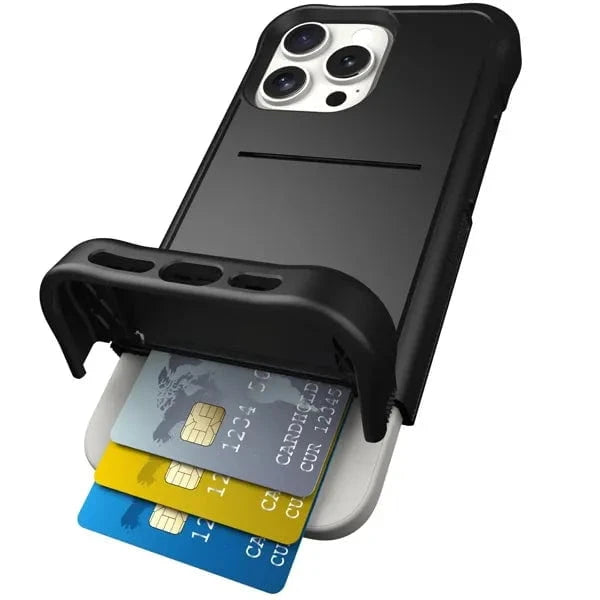
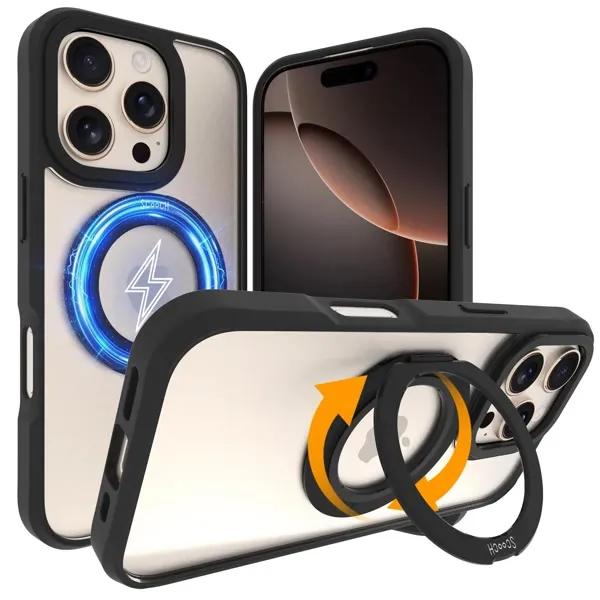
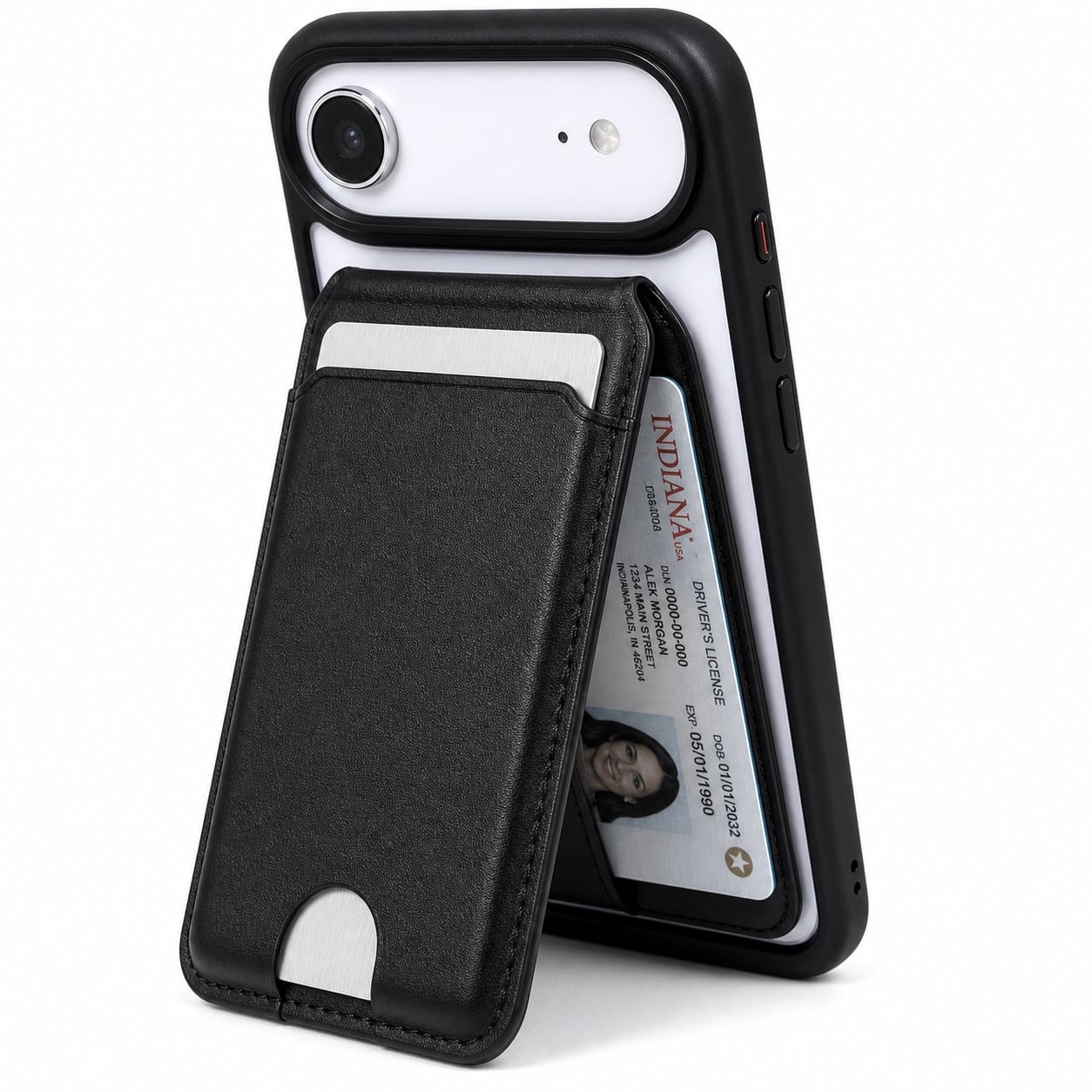
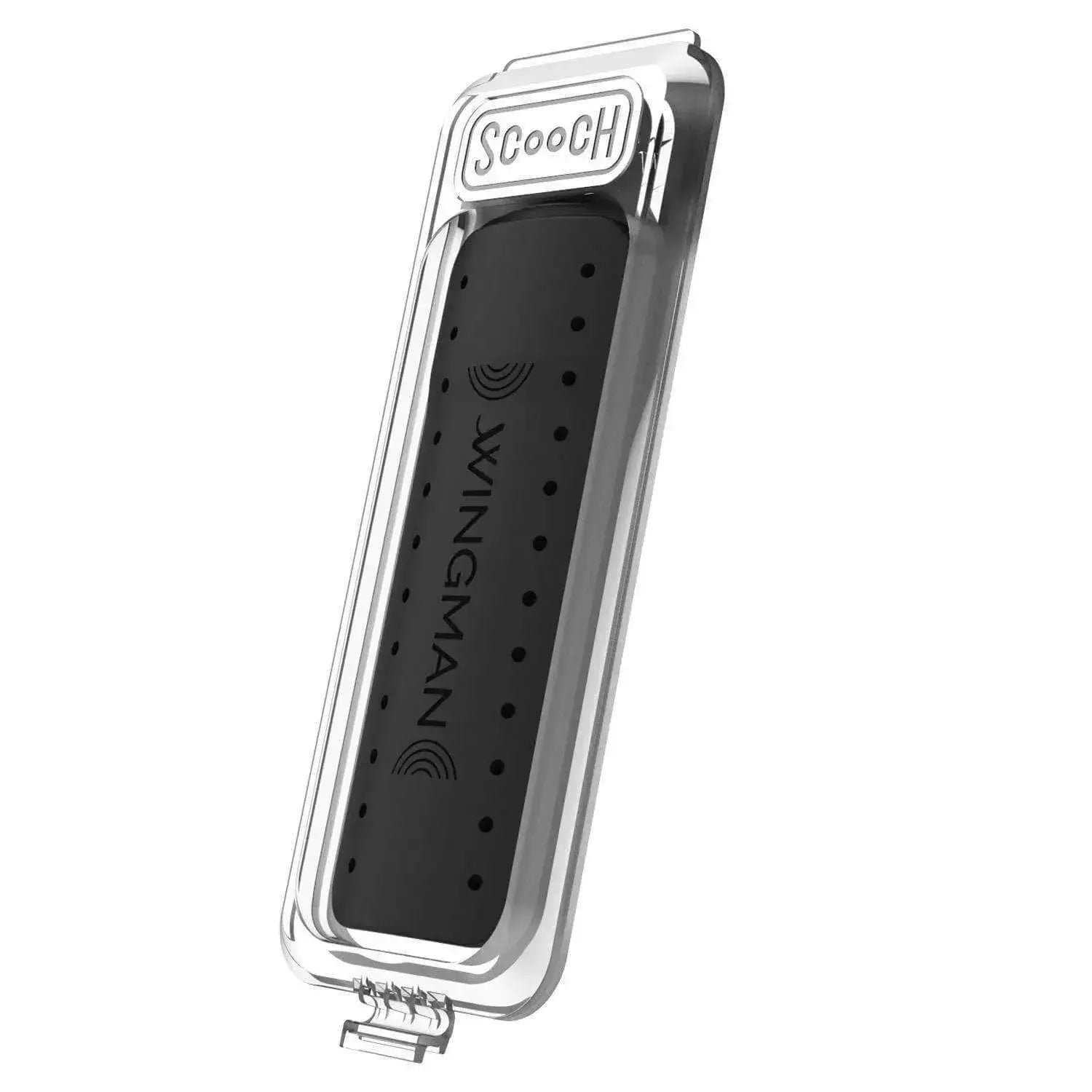
If you're looking for a wallet case, the Wingmate has a hidden bottom-loading card compartment with built-in RFID protection, holds 3 cards and cash, and is 10-foot drop tested. Your cards go in, they disappear, and nobody knows they're there.
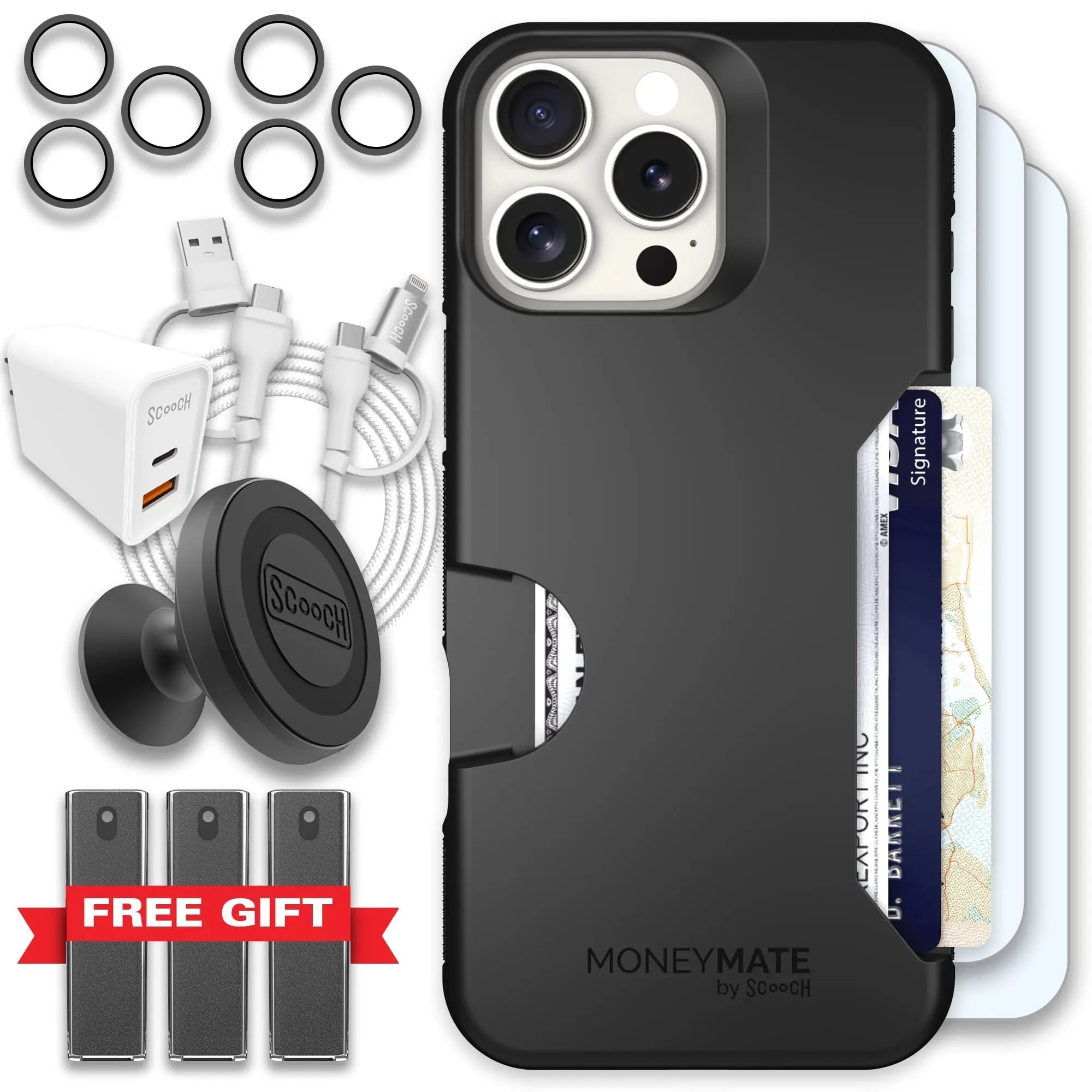
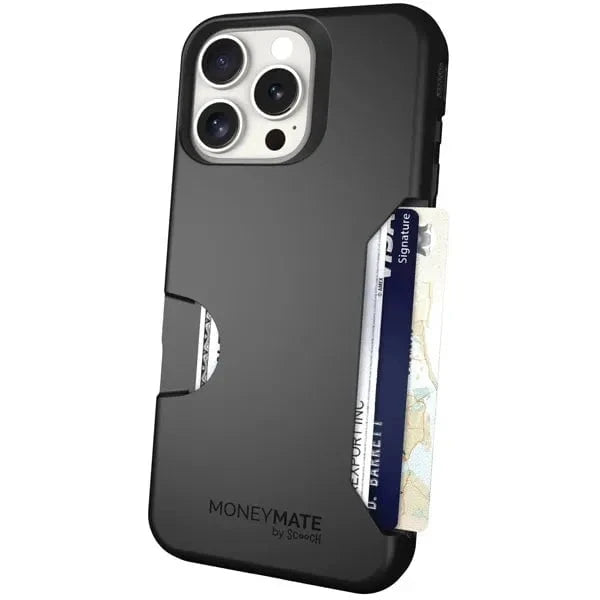
Want something slimmer? The Moneymate is the thinnest wallet case we make, starting at $24.99. Same drop protection, push-to-release card access.
Protect Your Whole Setup
Your cards are safe inside the case. Now make sure the rest of your phone is covered too.
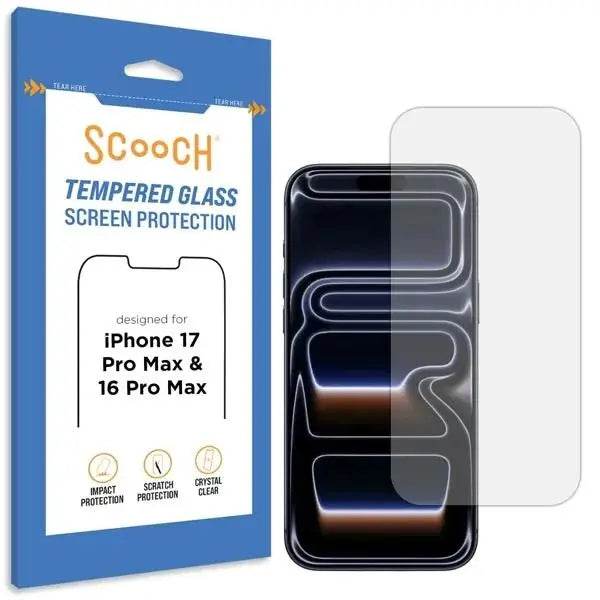
- Screen protector: A tempered glass screen protector keeps your display scratch-free, even with cards and keys sharing pocket space. Scooch screen protectors are designed to work perfectly with our wallet cases.
- Camera lens protector: The camera bump is the most exposed part of your phone. A lens protector adds a layer of sapphire-grade glass without affecting photo quality.
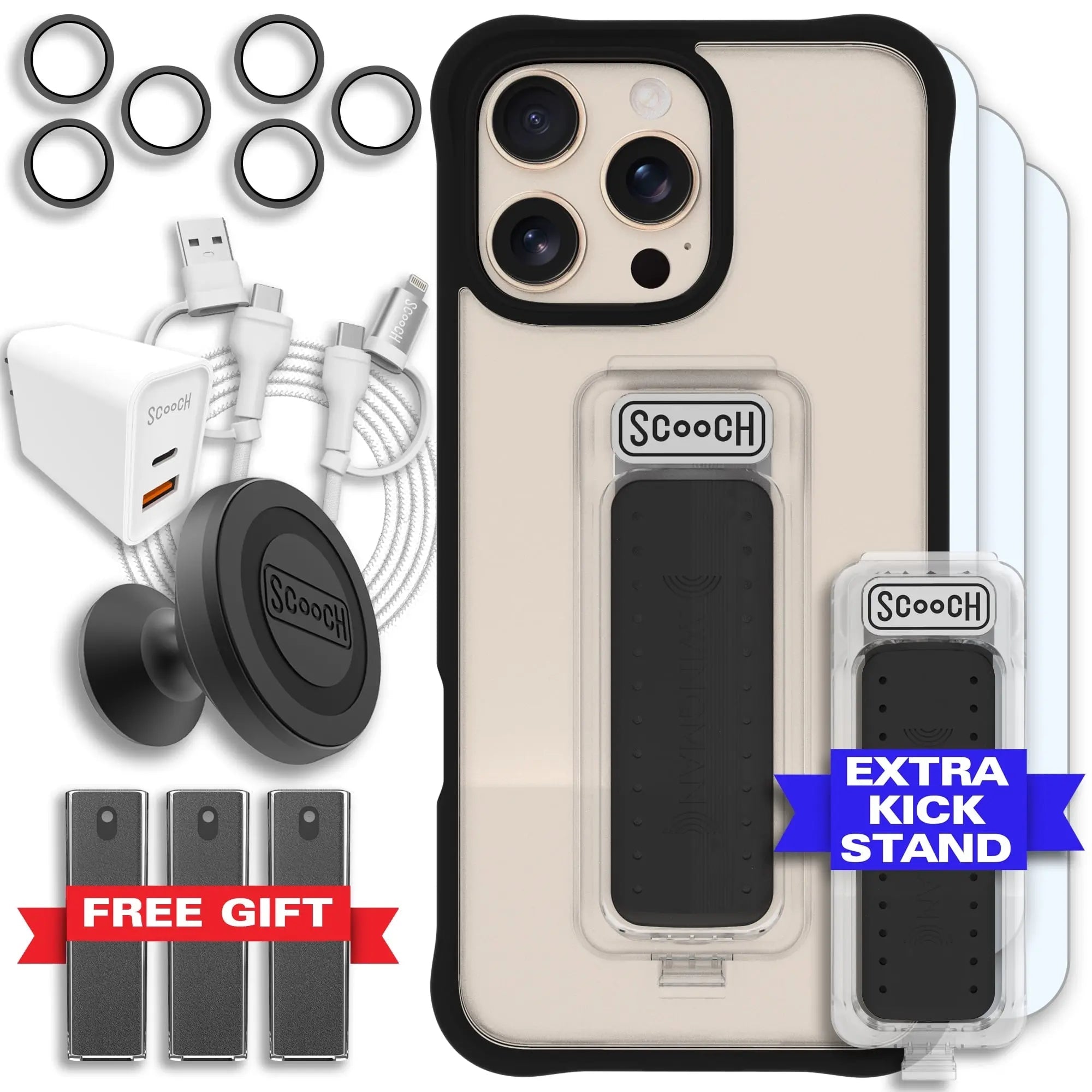
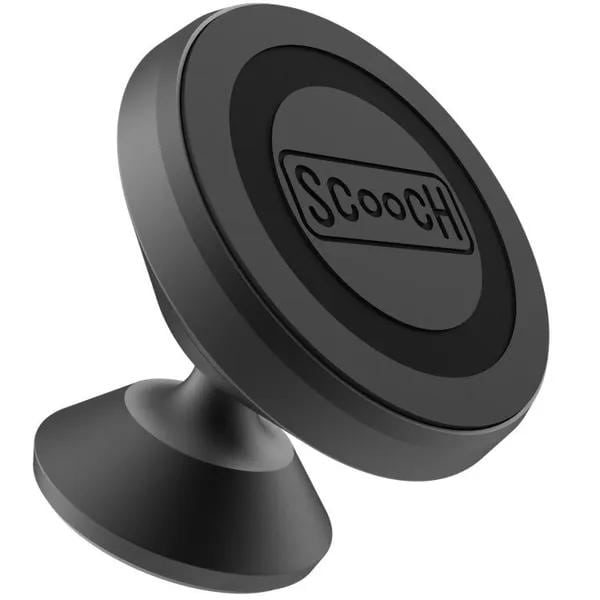
- Car mount: The Wingmate doubles as a car mount when paired with the Wingmount. No magnets needed, no MagSafe compatibility issues, just drop your phone in and drive.
FAQ
Can phone magnets erase a credit card?
No. Phone magnets produce less than 200 gauss. Credit card magnetic stripes require approximately 4,000 gauss to erase. The magnets in your phone are about 20x too weak to cause any damage.
Will keeping my credit card in a phone case demagnetize it?
No. The EMV chip cannot be affected by magnets at all (it stores data digitally, not magnetically). The magnetic stripe on a credit card (HiCo) is resistant to the weak magnets found in phones and phone cases.
Do wallet cases damage credit card chips?
No. EMV chips are semiconductor-based and store data digitally. They are completely immune to magnetic fields. You could press a magnet directly on the chip with no effect.
Is it safe to put a credit card next to a phone?
Yes, for credit and debit cards. Their HiCo magnetic stripes require approximately 4,000 gauss to erase, far more than any phone produces. However, LoCo cards like hotel key cards can be affected, so keep those in a separate pocket.
Does MagSafe damage credit cards?
No. Consumer Reports tested this and confirmed MagSafe does not demagnetize credit cards. Apple also states their MagSafe Wallet is safe for credit cards. The MagSafe ring produces about 200 gauss, well below the 4,000 gauss threshold for credit card stripes.
Is RFID skimming a real threat?
It's almost entirely theoretical. Security researchers and law enforcement have not documented verified cases of criminals successfully using RFID skimmers to steal credit card data in real-world settings. Modern contactless cards use dynamic authentication codes that can't be replayed.
Can wireless charging damage a credit card?
Potentially, yes. Active wireless charging creates a stronger electromagnetic field than passive phone magnets. Don't leave a credit card between your phone and a wireless charger while it's actively charging. Wired charging has no magnetic field concerns.
Why does my hotel key card stop working near my phone?
Hotel key cards use LoCo (Low Coercivity) magnetic stripes that can be erased at around 300 gauss, much closer to what phone magnets produce. This is why hotel keys are vulnerable while your credit card (HiCo, 4,000 gauss threshold) isn't. Keep hotel keys in a pocket away from your phone.
Sources
- ISO/IEC 7811 — Identification cards: Recording technique for magnetic stripe (defines HiCo ~4,000 Oe and LoCo ~300 Oe coercivity thresholds)
- EMVCo — EMV chip deployment data and transaction statistics
- Consumer Reports — "Will MagSafe Demagnetize Your Credit Cards?" (tested and confirmed no demagnetization)
About the Author
John Stagge is the founder and CEO of Scooch, the phone case brand known for hidden wallet cases and 10-foot drop tested protection. Since launching the Wingmate in 2019, Scooch has sold over 500,000 cases with 10,000+ five-star reviews. John personally tests every case design and writes about phone accessories, tech, and the gear that makes everyday carry simpler.